
SEMINAR ON
, 13/09/2018 12:09Within the framework of REACT project on climate change funded by ERAMUS+, a seminar on “Climate change and renewable energy” took place in the morning of September 10 at the University of Social Sciences and Humanities.
.jpg)
The seminar has invited Prof.. Michico Yoshii (Okinawa University), Dr. Megumi Sakamoto (Fukushima University), Prof. Chung Hoang Chuong (Center for International Studies) as the key speakers.
Prof. Megumi talked about cooperations in clean energy between Japan and Vietnam in recent years. For example, Japan provided Tan Nhut secondary school (HCMC) with fund for installing solar panels, providing with 25% amount of power.

Prof. Megumi, Fukushima University
Prof. Chung Hoang Chuong proposed some solutions towards this issue based on many years of experience in studying climate change in the Mekong Delta, including, the massive growth in hydroelectric dams. One of the prominent solutions is multi-discipline and cooperation among countries in Mekong river. In this proposal, Prof. Chuong suggested making code of conduct for all river basins. Besides, Prof. Chuong also stressed on developing renewable energy and solar energy to minimize building hydroelectric plants.

Prof. Chung Hoang Chuong, Center for International Relations, USSH
The model of “wireless house”
This model was introduced by Prof. Michiko in the seminar and impressed participants with a statement “Nothing is as valuable as independence and freedom in electricity”. “Independence” here means people will not rely on state source of energy. In “wireless house”, households install solar panels to get power themselves instead of getting it from the government. This model has been widespread following tsunami and earthquake - double disaster in Japan in 2011.

Prof. Michiko, Okinawa University
Prof. Michiko said Fukushima disaster is a philosophical revolution which has changed Japanese lifestyle as they wonder “What is behind the plug?”. After the disaster, many families choose “house with wireless energy” and so does Prof. Michiko’s family. With the initial cost of installment at 30.000USD, solar panels can produce power with a capacity of 5kWh per day for refrigerators, washing machines, TV, fans, lights, etc. However, this limited amount of power requires every household to be more saving without using other devices such as air conditioners, microwaves, etc.

Philosophical revolution
In addition to introducing this model in Japan, Prof. Michico also provided with some information regarding this model in Vietnam. Specifically, AEON mall (HCMC) has installed 1424 solar panel with a capacity of 340kWh.
Nevertheless, Prof. Michico stressed application of this model just partly help to reduce capacity of power stations. Public awareness on power saving is vitally important in order to change the power industry in particular and their lives in general.
Talking about this model in Vietnam, Vice chairman of project department from Thuan Binh Wind Power Joint Stock Company, Mr. Nguyen Van Cuong said some provinces in the Central, especially Ninh Thuan have become center of renewable power in Vietnam thanks to the investment in wind power station. In addition, renewable energy has been attracting intention from various businesses, as about 100 businesses in Phan Thiet has installed solar panel system.
In closing remarks, Director of CVSEAS, Dr. Tran Dinh Lam expressed his appreciation towards experts on climate change and their proposals for economy development which raises students’ awareness of saving biological environment, aiming at a better environment for the future.
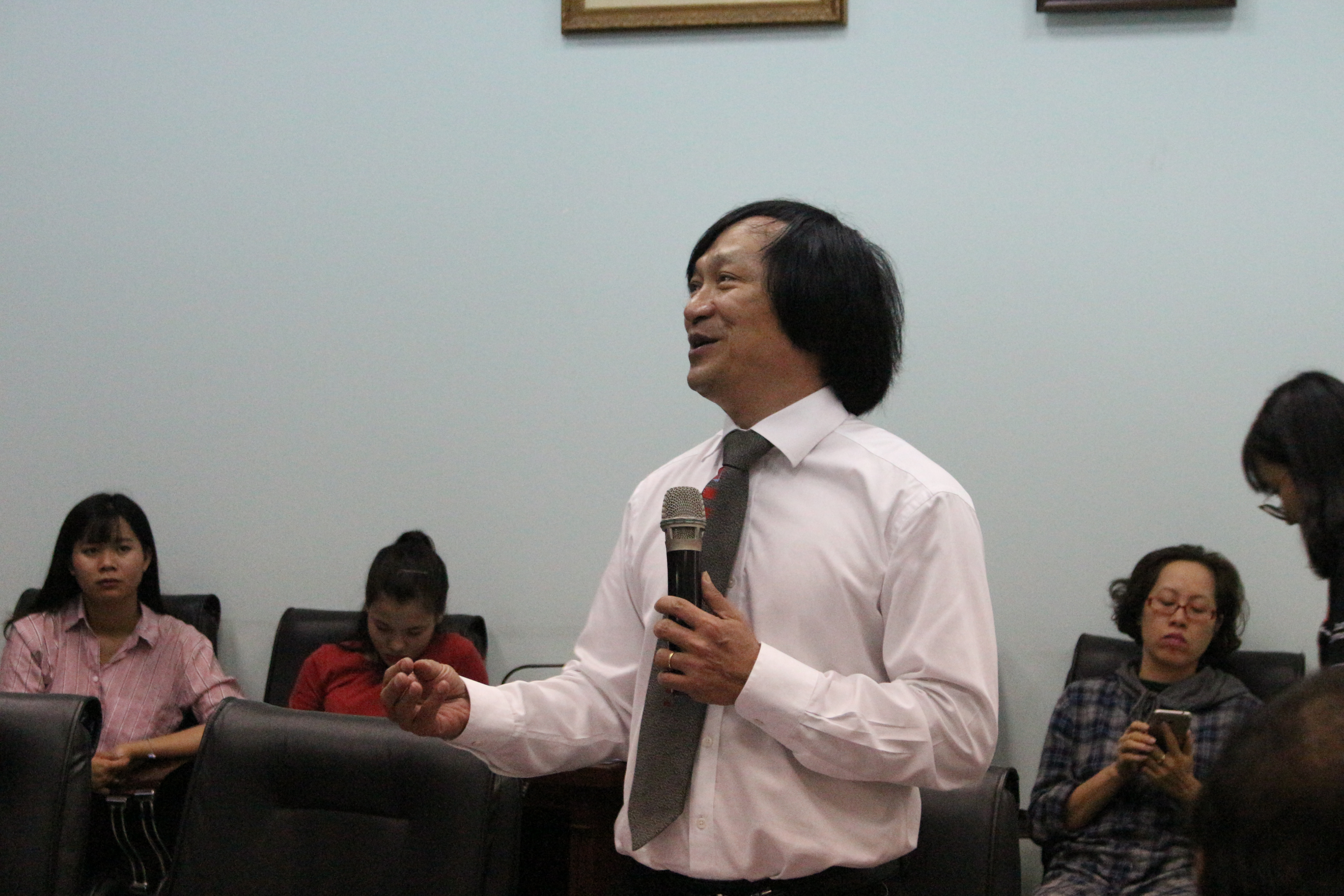
Dr. Tran Dinh Lam, Director of Center for Vietnamese and Southeast Asian Studies
Participants of the seminar includes:
- Director of CVSEAS, Dr. Tran Dinh Lam
- Dean of Faculty of Sociology, Dr. Nguyen Thi Hong Xoan
- Associate Dean of Faculty of Anthrology, Dr. Truong Thi Thu Hang
- Dean of Faculty of International Relations, Dr. Trinh Thu Huong
- Acting Dean of Faculty of Geography, Nguyen Thi Thu Hien, MA
- Representatives from businesses and post graduate students.

Recent news
HEIP-linkINTRODUCING PROJECT TOURIST TO THU DAU MOT UNIVERSITYV2WORK FINAL CONFERENCE AND 1ST VEES-NET ANNUAL MEETINGSOLUTIONS FOR THE DEVELOPMENT OF SUSTAINABLE TOURISM IN VIETNAM AND THAILANDINTERNSHIP IN HANOI OF TOURISM STUDENTS - TOURIST PROJECTTOURIST PROJECT - STUDENT EXCHANGE PROGRAM TO HO CHI MINH CITYINTRODUCING PROJECT TOURIST TO STUDENTS OF NHA TRANG UNIVERSITYINVITATION TO TOURIST PROJECT SEMINAR BY CENTER FOR VIETNAMESE AND SOUTHEAST ASIAN STUDIESRESULTS FROM PROJECT V2WORKV2WORK'S SERVICE: POSITIONING PERSONAL BRAND AND WRITING EFFECTIVE CVs