
THE 3rd REGIONAL ROUND TABLE: INTEGRATING CLIMATE CHANGE INTO EDUCATION AT UNIVERSITY LEVEL
, 04/04/2019 08:04Within the framework of React project funded by Eramus+, the 3rd Regional Round Table: “Integrating climate change into education at university level” was held at Hue University of Agriculture and Forestry on March 29th 2019.
Delegates include lecturers and researchers from high education institutions of Vietnam, Laos, Cambodia, and experts from Spain, Italy, France and Germany. In addition, officials from government agencies, private enterprises were invited in discussion and making suggestions for integrating climate change into education at university level, thereby creating the sustainable affects and spreading knowledge on climate change through university education programs.
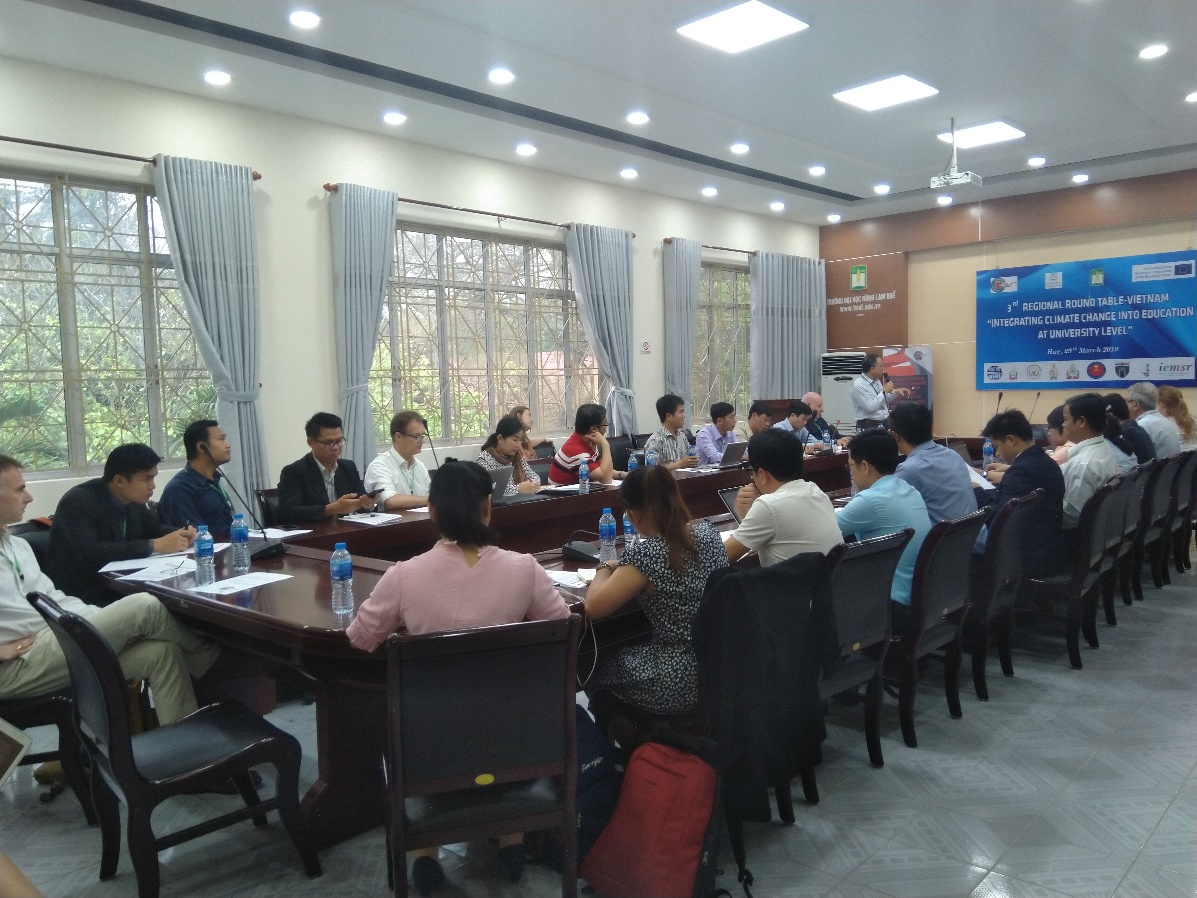
The Round Table was divided into two sessions: presentation and discussion, started with a presentation on “Climate Change and Education – the UNESCO framework” by Prof. Pietro Zunino.
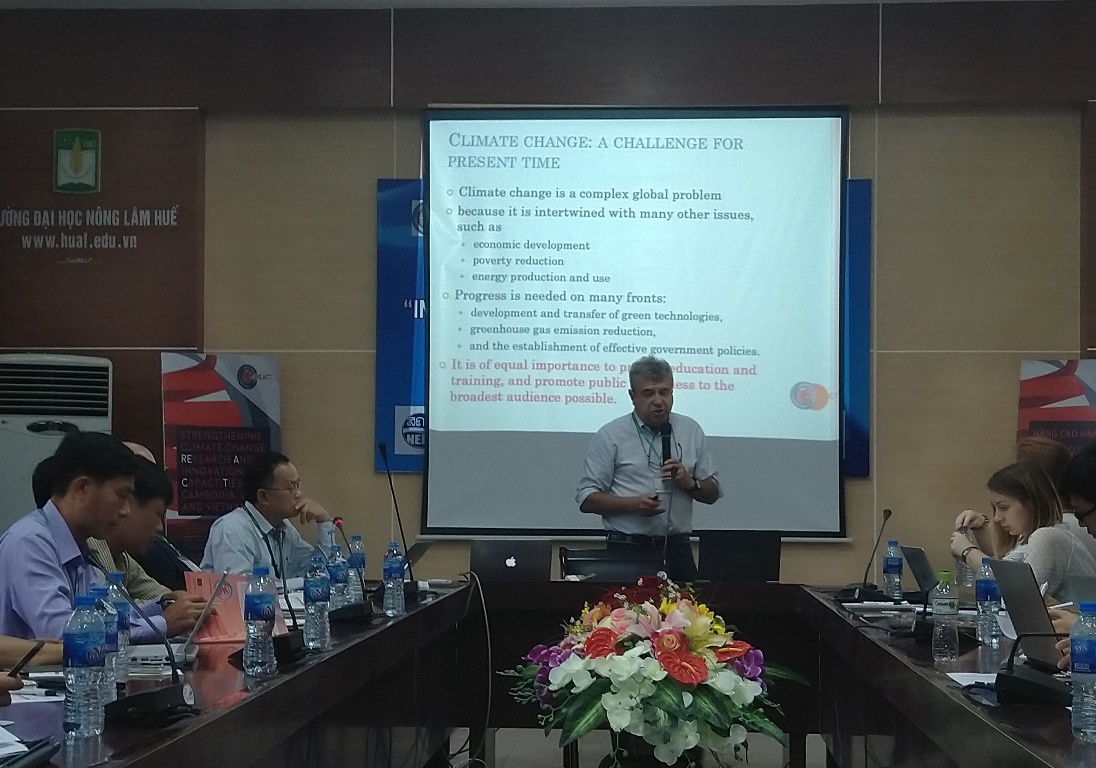
Presentation of Prof. Pietro Zunino
In the discussion session, participants were divided into 3 groups to discuss the topics about integrating climate change into curricula of universities:
- How are the courses related to climate change in the curriculum framework of universities in reality?
- What are the requirements of society for integrating climate change into the curriculum framework?
- How is the gap between integrating climate change in the curriculum framework of universities and social requirements and solutions for the gap?
- How do stakeholders (Universities, Institutes, GOs and NGOs, private enterprises...) contribute to improve the integration of climate change into curriculum framework of universities?
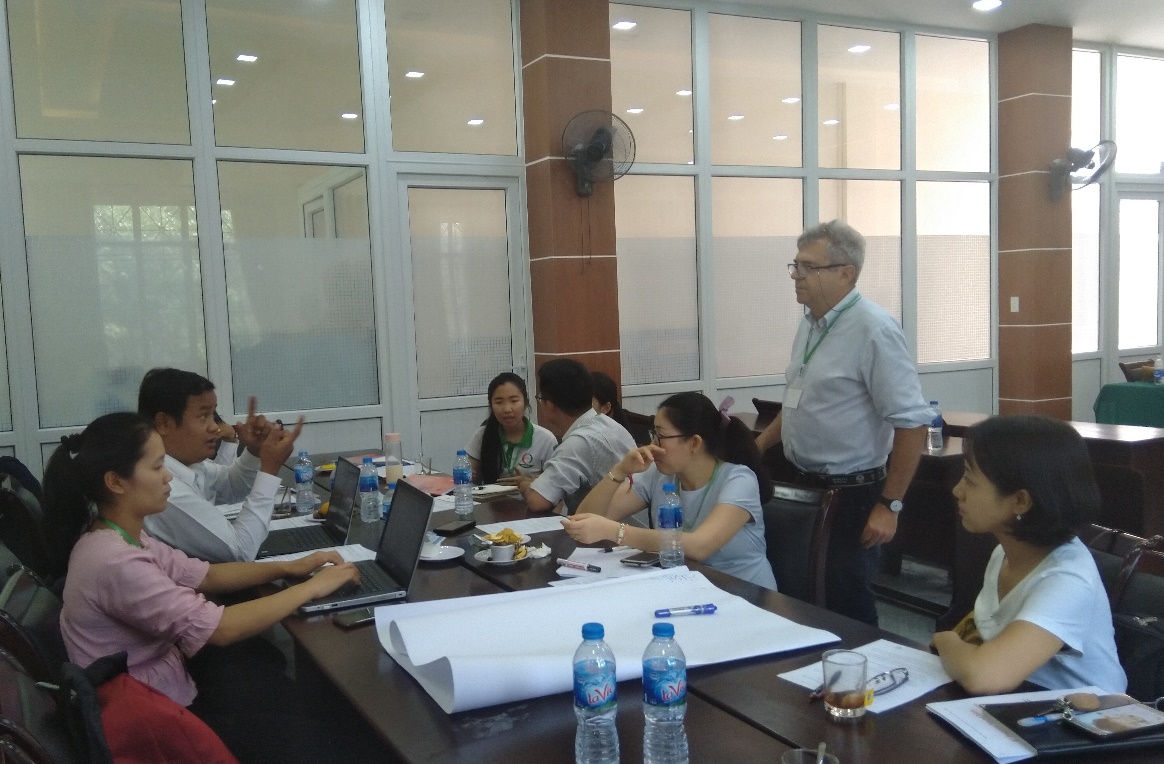
Group discussion
At the end of 3rd Round Table, each group presented the discussion results and received valuable feedback from experts, lecturers as well as attendees from government agencies and private enterprises. Results from the Round Table are the first steps for further activities to integrate climate change into curriculum framework of universities as well as realize solutions to connect the outcomes of education programs with the needs of socio-economic organizations in the field of climate change.

Presenting results of group discussion

Recent news
HEIP-linkINTRODUCING PROJECT TOURIST TO THU DAU MOT UNIVERSITYV2WORK FINAL CONFERENCE AND 1ST VEES-NET ANNUAL MEETINGSOLUTIONS FOR THE DEVELOPMENT OF SUSTAINABLE TOURISM IN VIETNAM AND THAILANDINTERNSHIP IN HANOI OF TOURISM STUDENTS - TOURIST PROJECTTOURIST PROJECT - STUDENT EXCHANGE PROGRAM TO HO CHI MINH CITYINTRODUCING PROJECT TOURIST TO STUDENTS OF NHA TRANG UNIVERSITYINVITATION TO TOURIST PROJECT SEMINAR BY CENTER FOR VIETNAMESE AND SOUTHEAST ASIAN STUDIESRESULTS FROM PROJECT V2WORKV2WORK'S SERVICE: POSITIONING PERSONAL BRAND AND WRITING EFFECTIVE CVs